
Sellers waited a week to be paid, so stock money sat idle
Sellers don’t arrive looking for credit, and “financing” reads as debt, fees and lock-in. The aim was to make an unfamiliar money product feel trustworthy inside a dense operational tool.
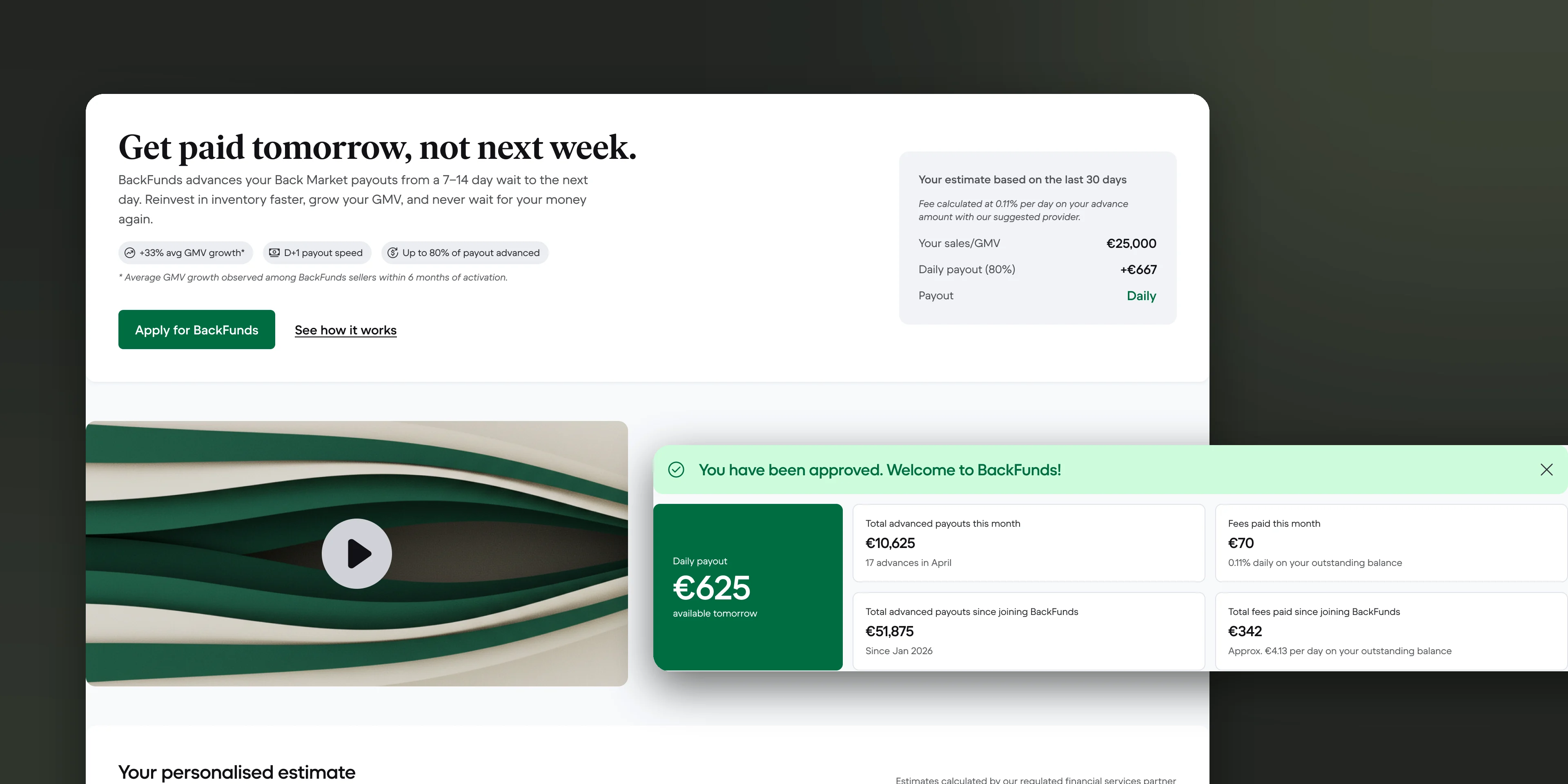
Daily payouts pay a seller the day after a sale
A third-party partner funds the advance, so Back Market carries no balance-sheet risk. The whole product lives inside the seller Back Office, where it is branded BackFunds.
- EligiblePlain reasonsThe seller sees why they qualify and an estimated range, not a risk tier.
- MatchedOne offerThe eligibility engine picks the cheapest funding partner and shows its full terms.
- Paid dailyTomorrow, not next weekEach day’s sales are advanced the next day.
- Repaid automaticallyNothing to wire backThe normal weekly payout routes to the partner and settles the advance.
One rule: never imply the seller owes money
An early payout is repaid automatically when the normal weekly payout lands.
The “outstanding balance” in the spec is really the float of advances not yet settled, not money the seller owes. A UI that said “you owe a balance” would frighten sellers away. Working the mechanics through with the PM confirmed there was no arrears path.
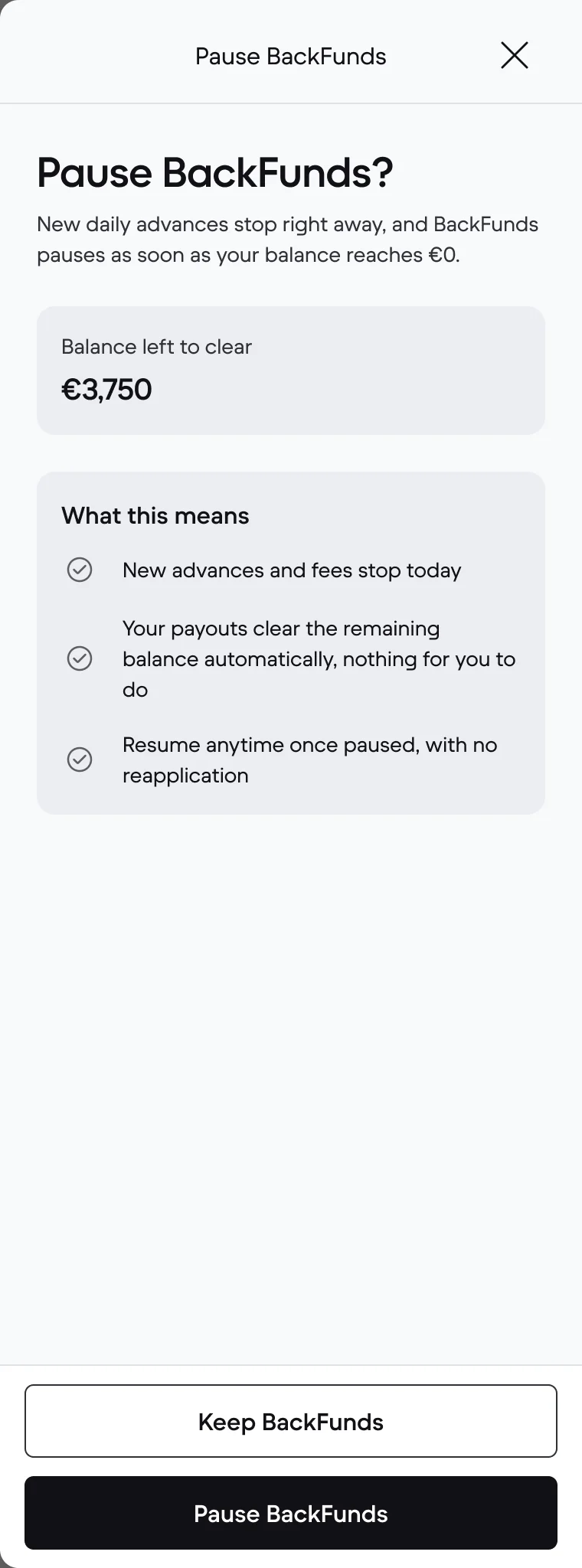
Never imply the seller owes money. The product carries no repayment burden, so the UI must not manufacture one.
| Never | Instead |
|---|---|
| “Balance left to clear: 3,750 €” | |
| “Your payouts clear the balance automatically, nothing for you to do” | |
| “Advances not yet settled” |
The same rule shaped the numbers. Exec feedback was explicit: no single daily fee before underwriting. Every cost became a range, “500 to 750 euros a day, around 0.1% to 0.15% daily”, and internal risk tiers became reasons a seller recognises.
Pause had to work while money was still out
- Rejected
Pause only when the balance is zero- Chose
- A scheduled pause that winds the balance down
An active seller almost always carries a float, so a pause at zero balance would have been practically unreachable. The scheduled pause stops new advances immediately, the balance winds down from incoming payouts, and the account flips to paused at zero. Cancel follows the same shape, terminal instead of resumable.
Pause is available when the outstanding balance is zero.
One matched provider, not a marketplace
- Rejected
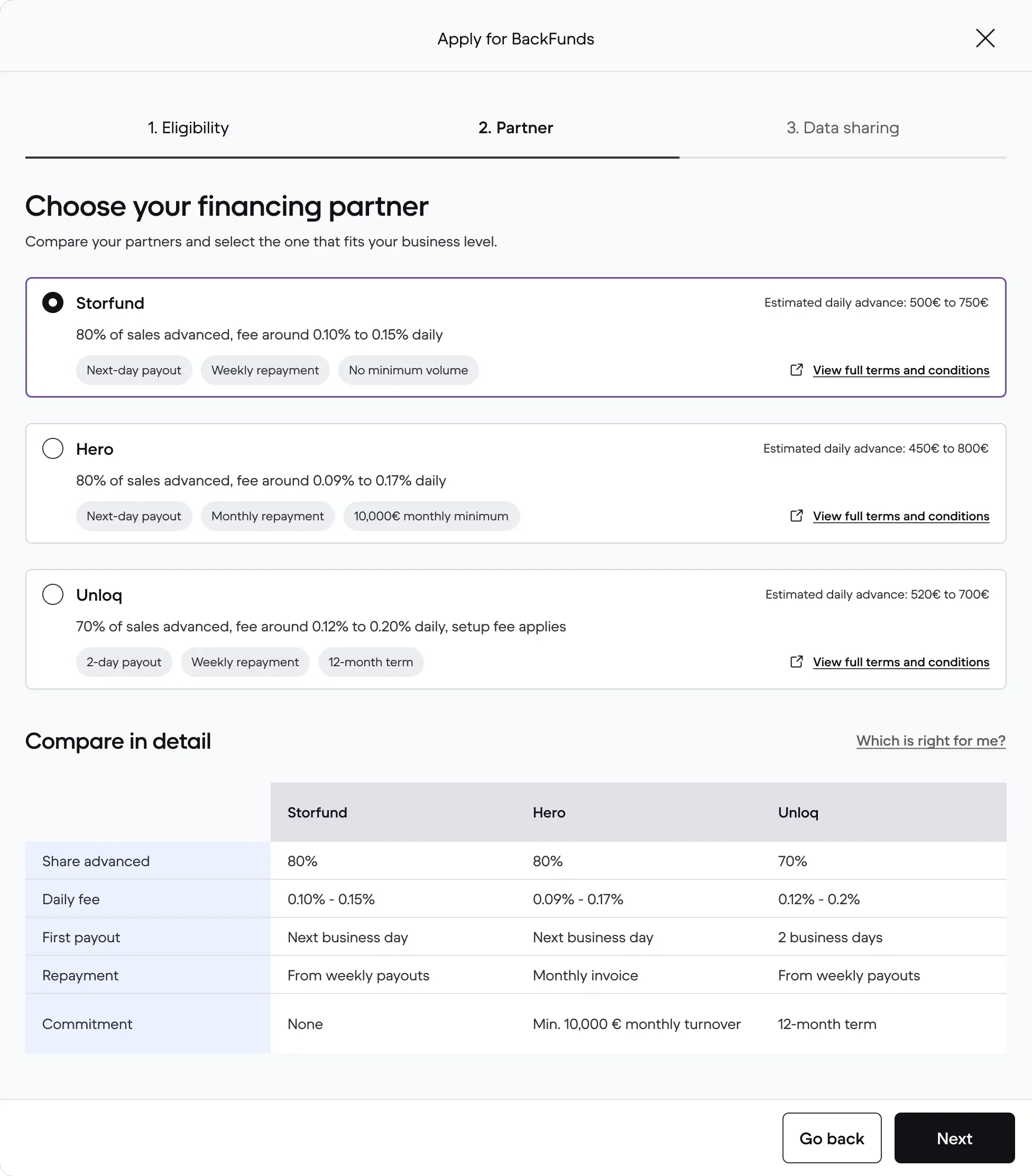
A comparison table of funding partners- Chose
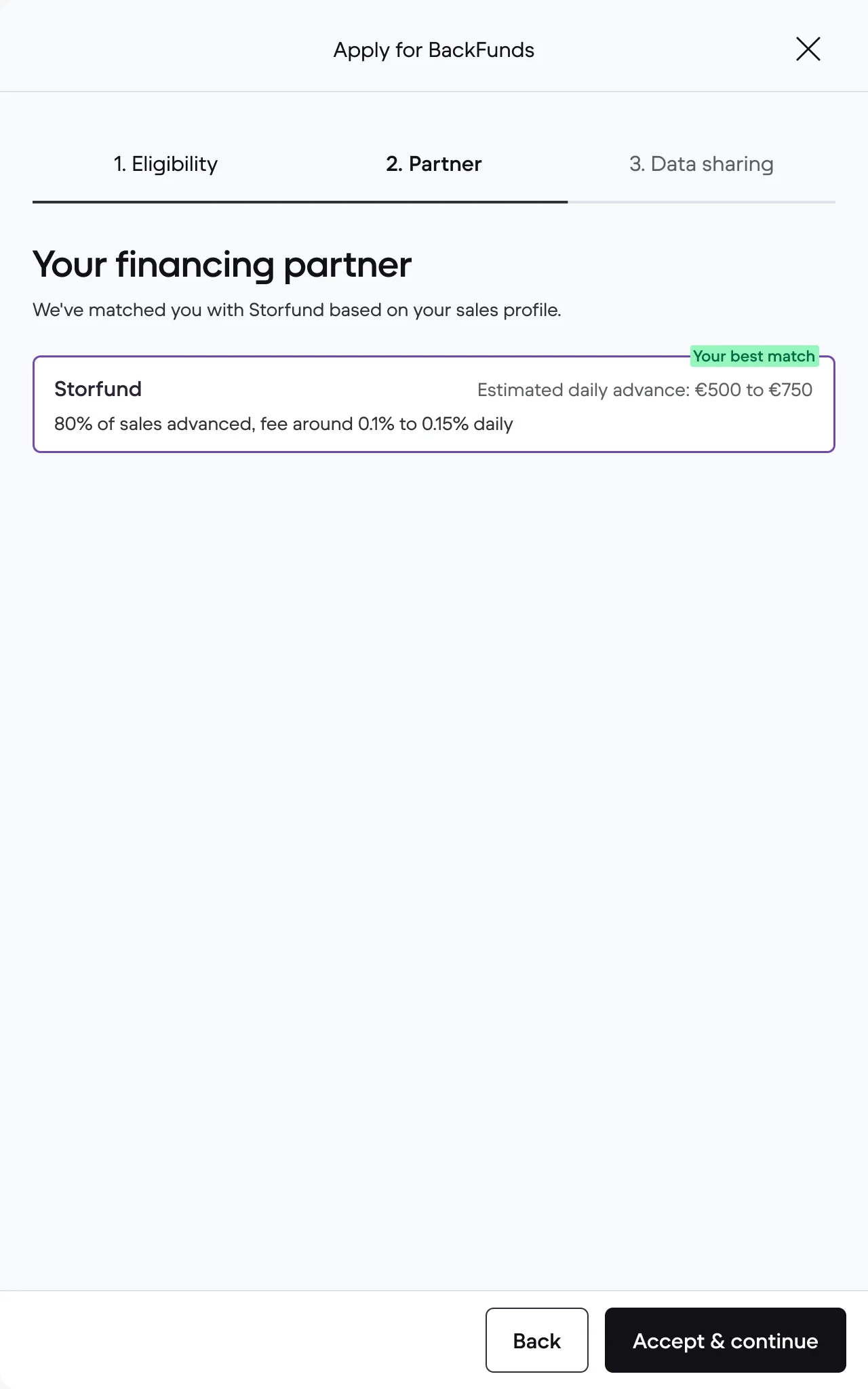
- One match, framed as “matched for you”
The eligibility engine already picks the cheapest fit. The seller can’t beat the engine’s answer, so a comparison table only moves work onto them.
Back Market’s numbers, not the partner’s calculator
- Rejected
The partner’s calculator, through its API- Chose
- Back Market’s own data and computation
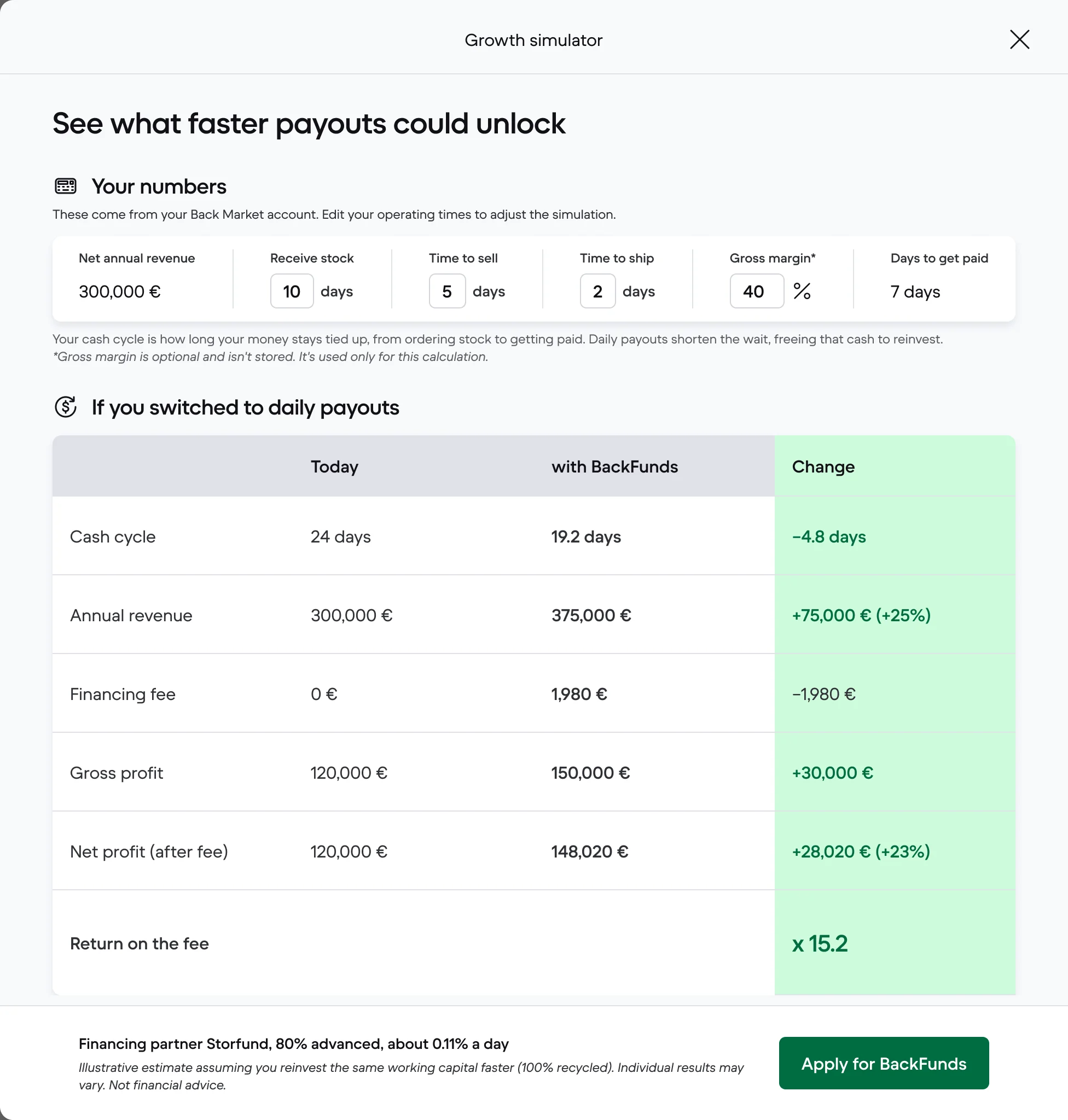
The partner’s calculator was built to sell. Sellers check these numbers against their own books, so the Back Office version had to be defensible line by line. Gross margin is optional, sharpens the estimate, and is never stored.
Use the partner’s calculator, through its API.
Servicing stays inside the Back Office
- Rejected
A redirect to the partner’s site after signup- Chose
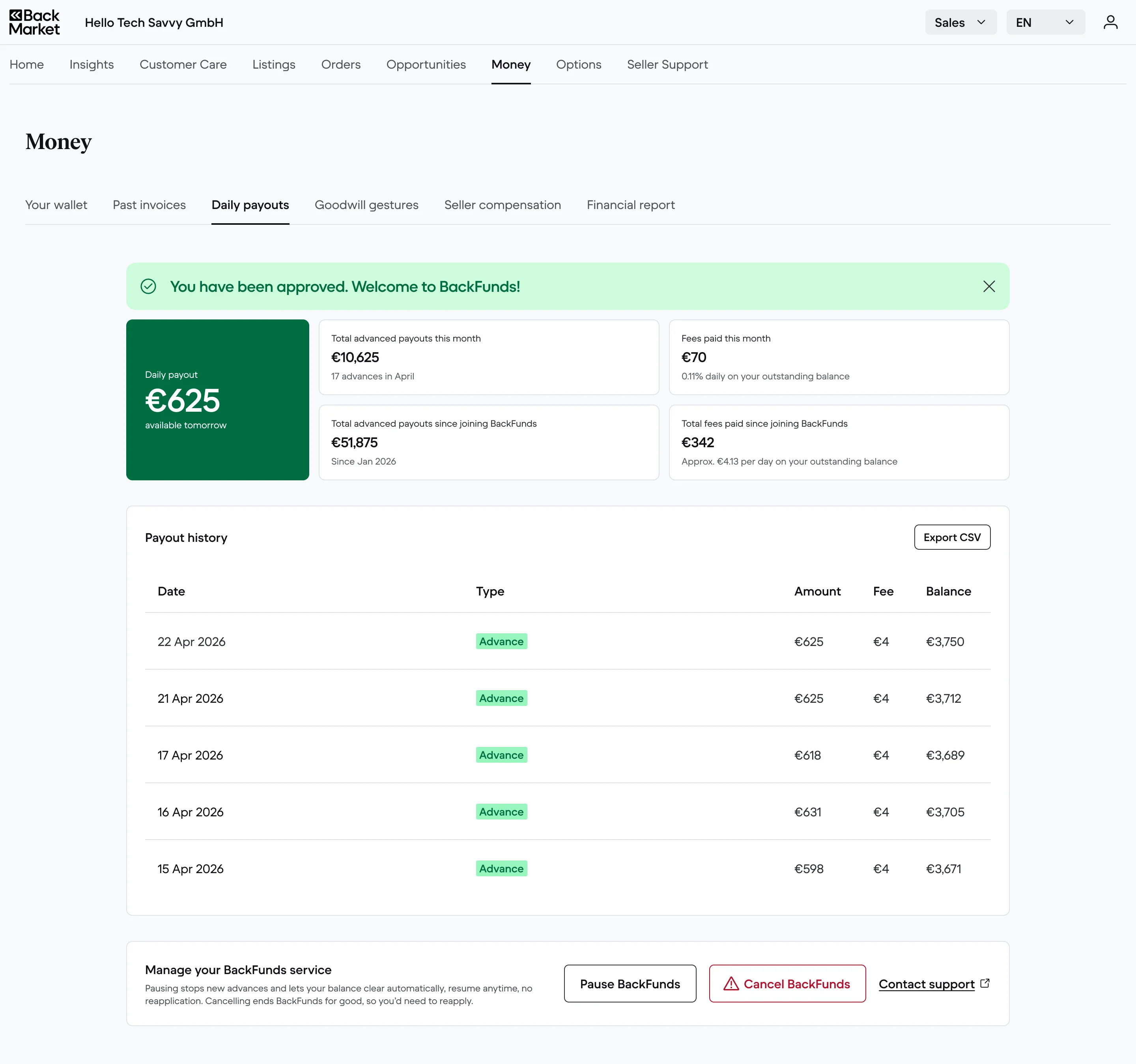
- The dashboard, pause and cancel, hosted natively
The handoff to the partner’s site after signup is where partners lose the most people. It is a deliberate departure from the partner’s standard model and a real maintenance cost. Product leadership signed off because native servicing keeps daily payouts feeling like Back Market and not like a redirect to a lender.
After signup, the seller manages everything on the partner’s site.
Five states designed up front, so “not approved” feels calm
A single signup screen only covers the first minute. A seller moves through a lifecycle.
- Eligible
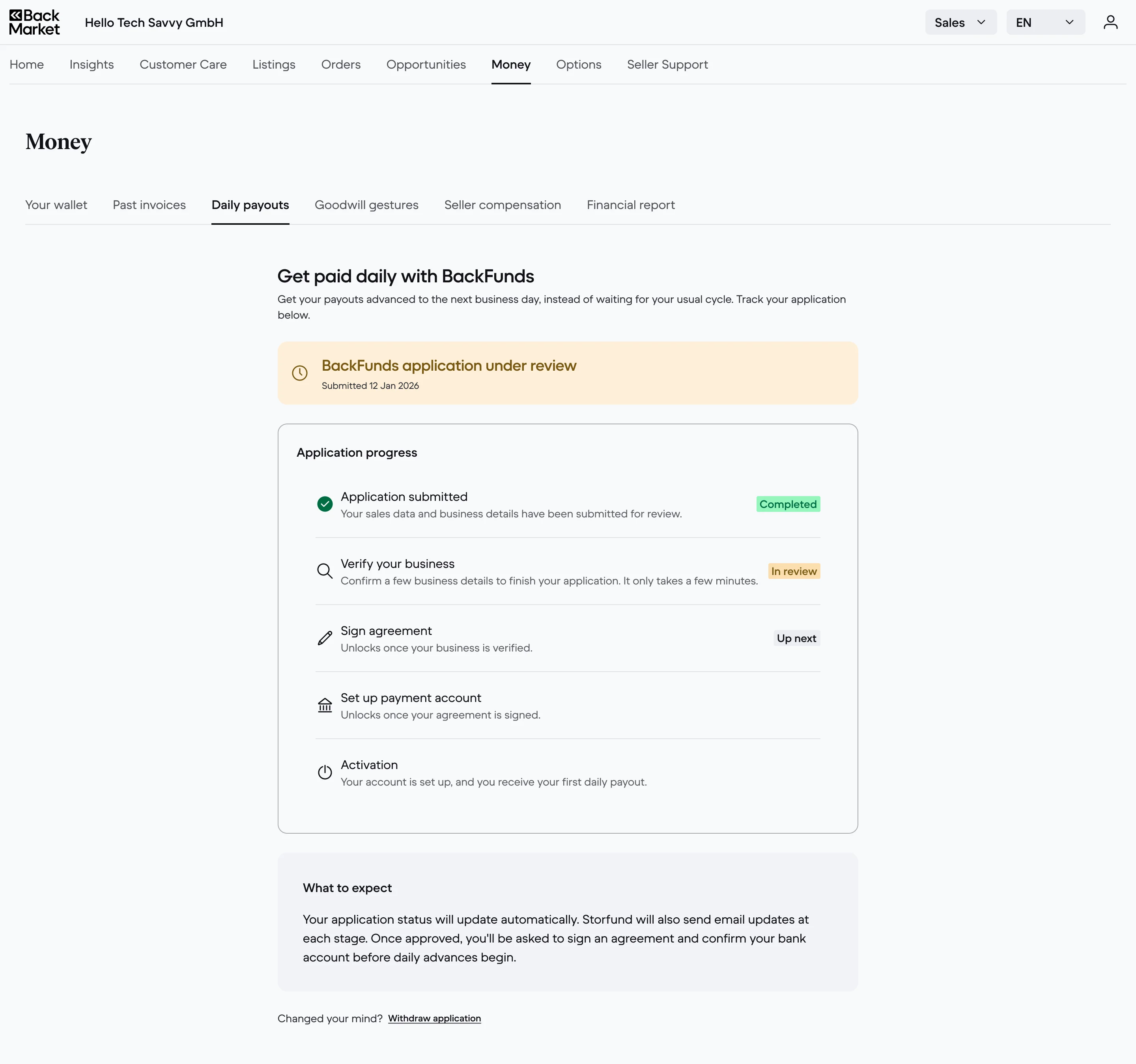
- Under review
- Action needed
- Active
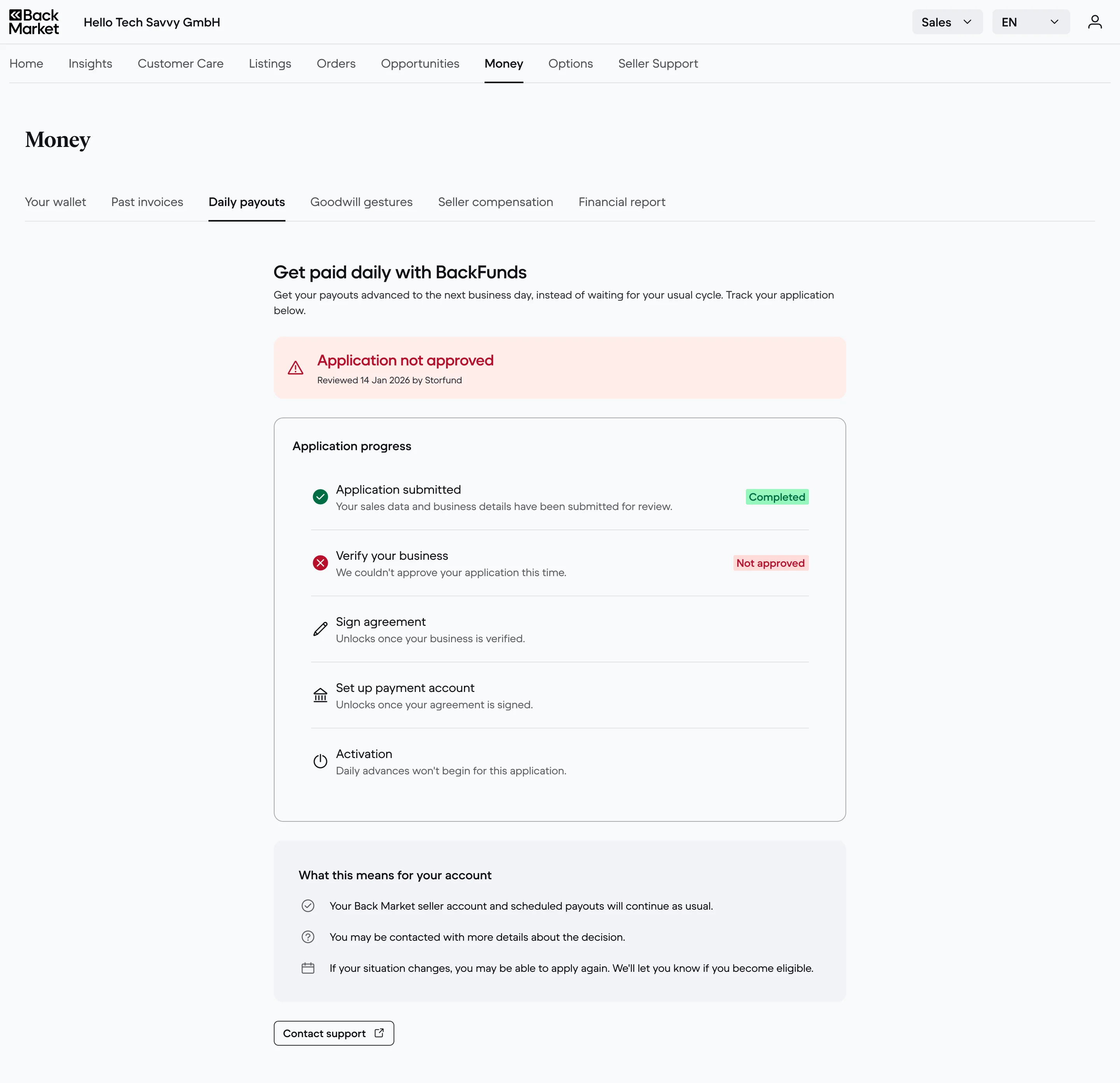
- Not approved
Each state maps to a semantic token in the design system, so colour does the signalling. Only “action needed” gets a loud primary button. Designing the states together pulled product questions forward, like how “not approved” should feel.
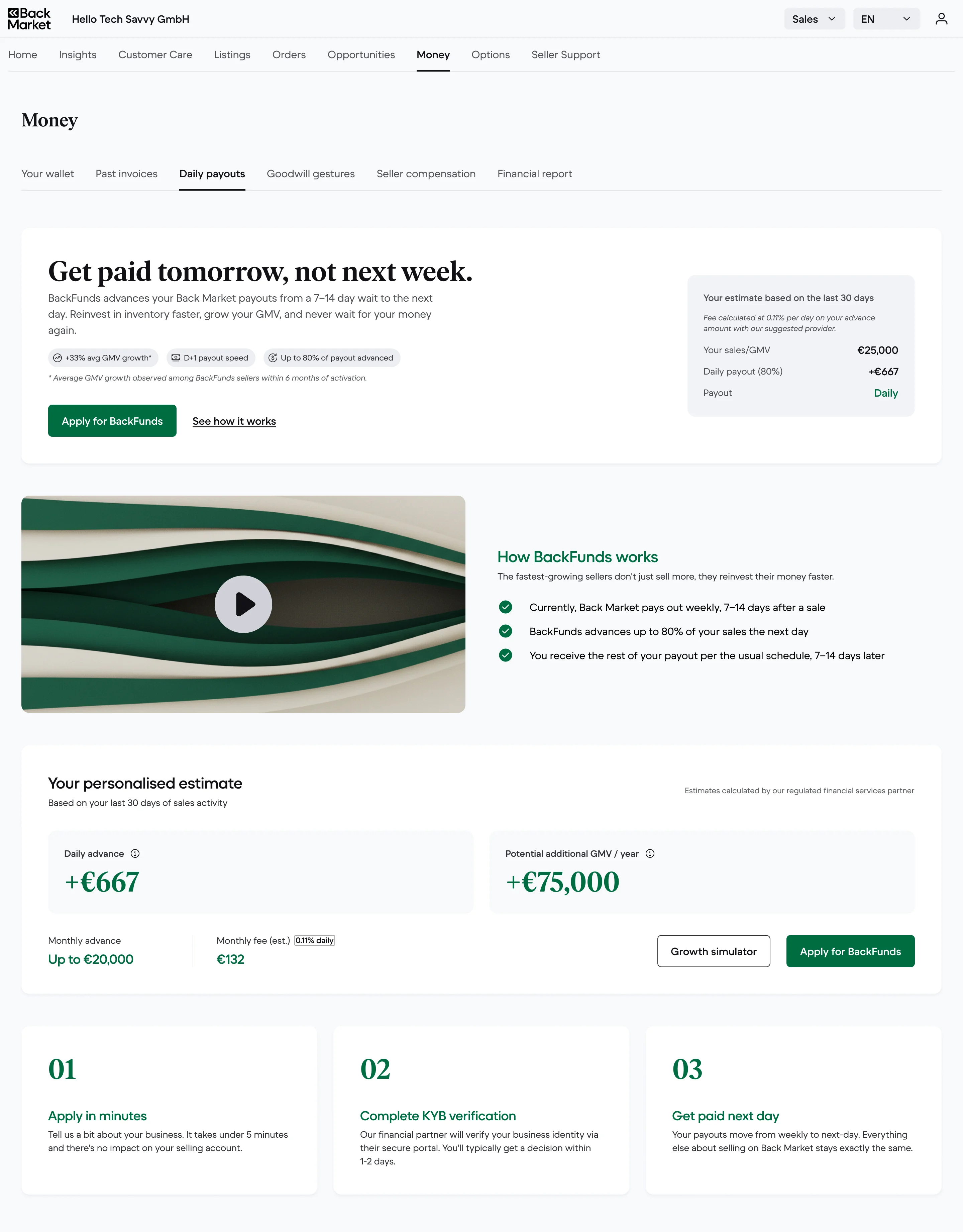
The banner went through the same discipline. Version one led with the product and read like an advert.
Lead with what the product is, then a button to apply.
A working prototype got the partner critiquing flows, not artwork
- SpecStill movingThe partner’s terms were changing and several mechanics were undefined.
- PrototypeCoded, not mockedHigh-fidelity screens built with agentic coding tools, close to the real product.
- ReviewFlows, not artworkStakeholders and the funding partner critiqued how it worked, not how it looked.
- NextPhased technical planningA positive review moved the project into planning.
Caught in the prototype
- Displayed
A balance that implied a month of advances- Possible
- Daily advances, repaid weekly
Every figure had to reconcile against one money model, and fixing it kept the prototype credible in exec and partner reviews.
Adoption up 8 points in 13 weeks, and support barely needed
Daily payouts shipped to eligible sellers as a native part of the Money and Wallet page, with a microservice replacing the earlier manual operations.
Adoption among eligible sellers, first 13 weeks
up 8 points in 13 weeks
Launch: 14%. Week 13: 22%. Year-end target: 30%.Two design choices sit behind it: framing the value at the moment of payout, and designing the whole lifecycle instead of a signup pitch.
Servicing questions stopped reaching humans, which means the balance, pause and lifecycle states were explaining themselves. Hosting all of it inside the Back Office made that possible.