
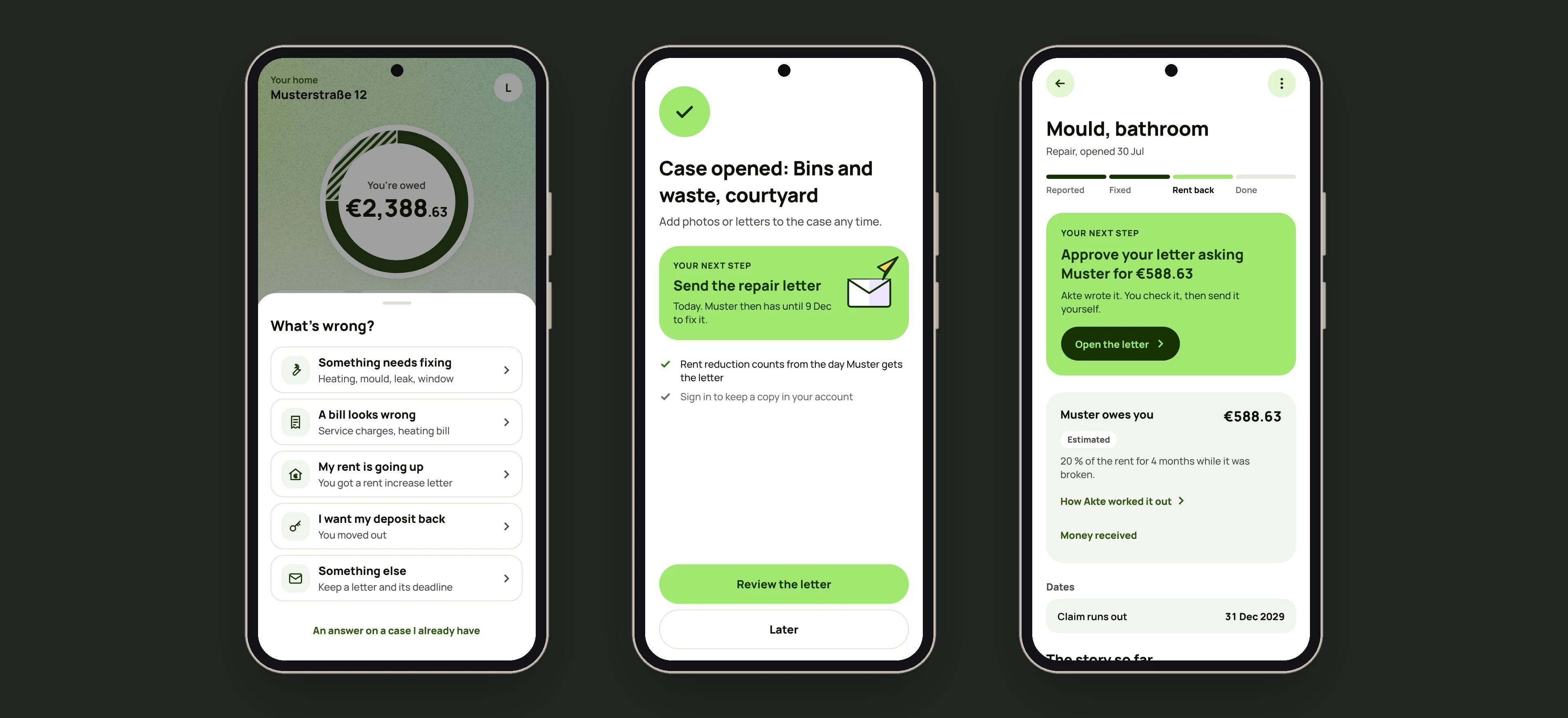
Renters lose money to deadlines nobody tracks
I kept hearing the same story from renters in Berlin: in person, from friends and online.
- Drive folders
- Gmail
- Phone photos
- Paper letters
Four places for one tenancy case. No deadline in any of them, and no next step.
Deadlines slip, money owed is never worked out, and people give up before getting back what they are owed. So I designed and built Akte to hold the case and say what to do next.
Akte turns a problem into one next step with a deadline
The renter adds photos, letters and one-tap answers. Akte works out where the case stands, so nobody has to set a status.
It covers four problems that make up about 69% of German tenant advice (Mieterbund figures, 2023), plus a catch-all: repairs, bills, rent increases and deposits.
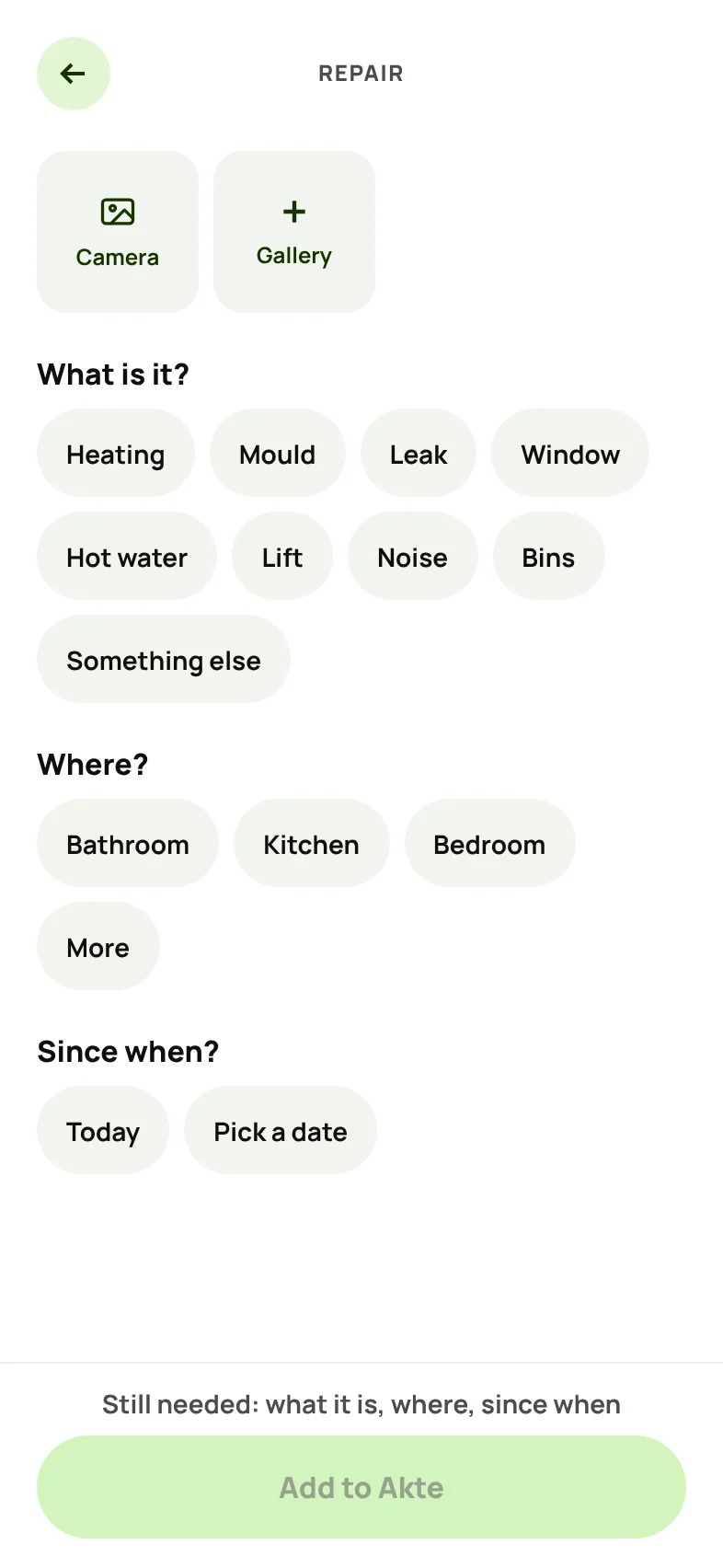
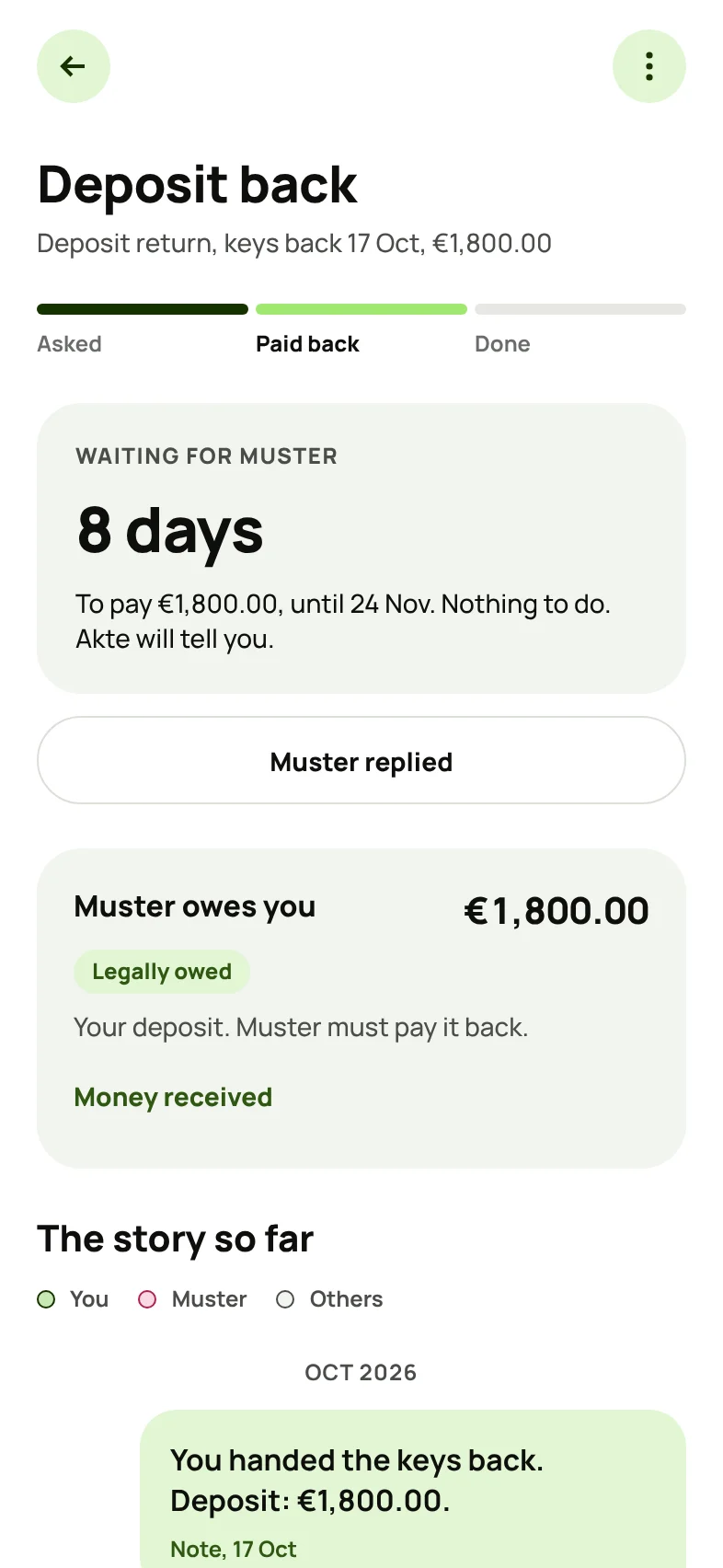
The first question is “What’s wrong?”, not “How do you want to add it?”
- Rejected
Pick how to add it, pick a case, type what’s wrong- Chose
- Five plain answers, then every answer is a chip
The answer decides what opens next: the camera for a repair, the scanner for a letter. Akte names the case itself. A repair takes 7 taps in QA, and the next step shows with its deadline before anything is typed.
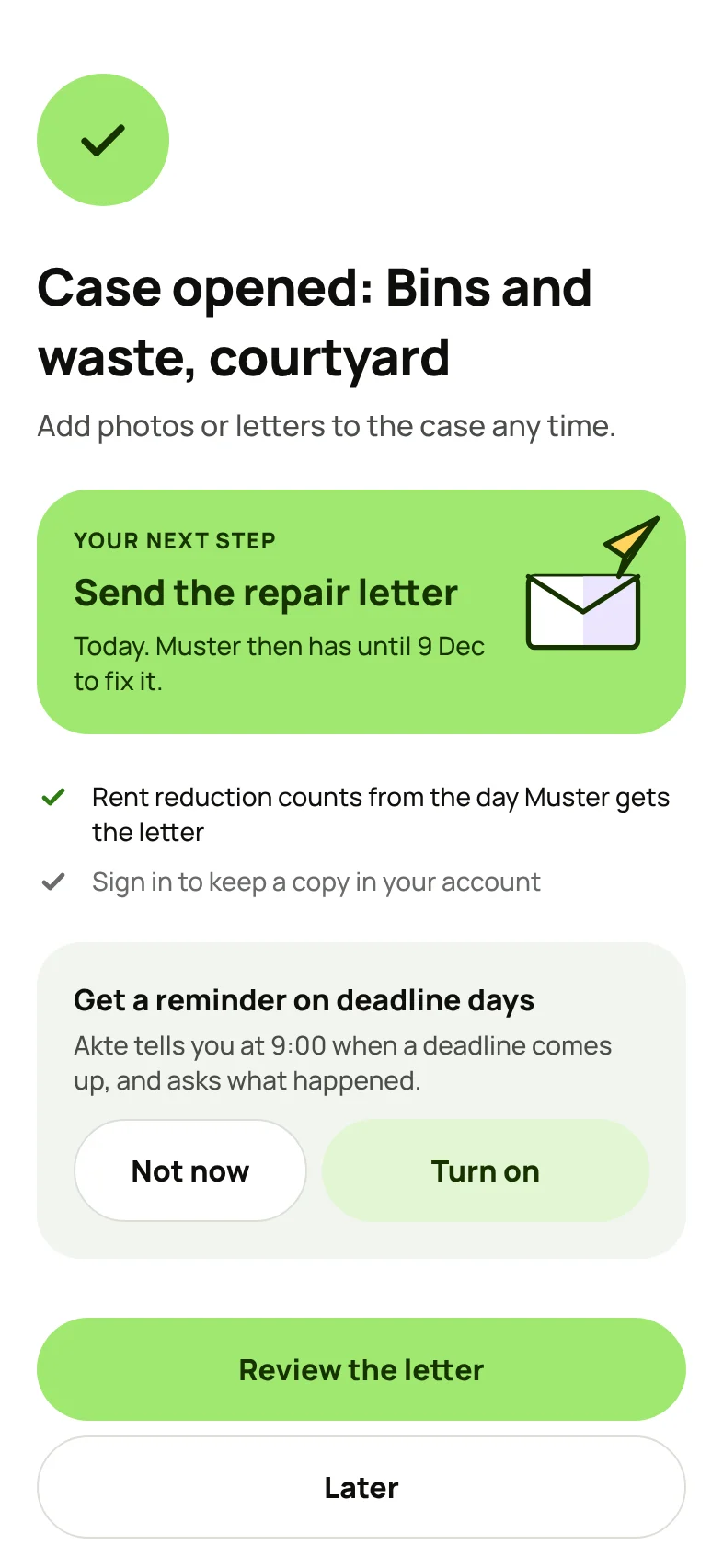
One card says whose move it is
- Rejected
Legal stages: Opened, Waiting, Escalated, Money owed, Closed- Chose
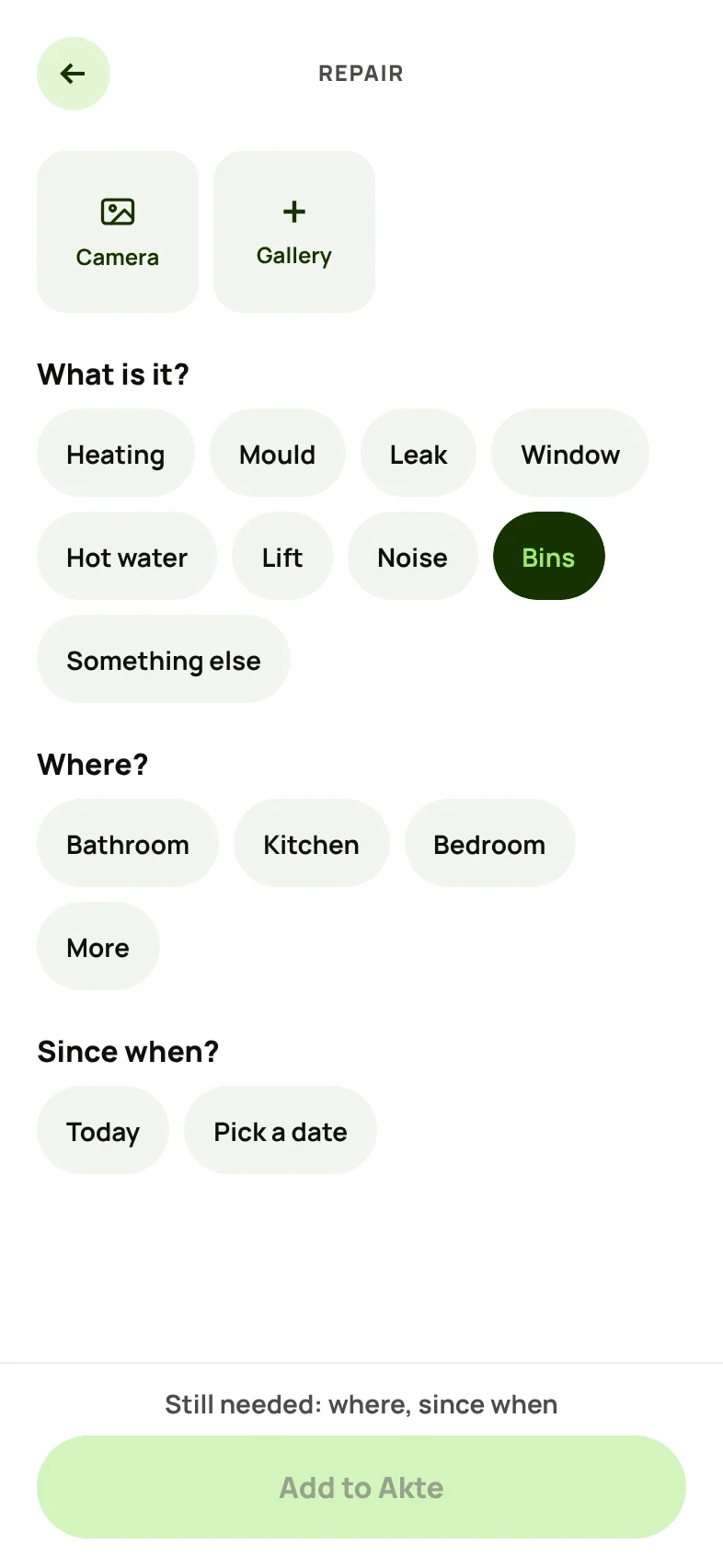
- Outcomes per problem, and one card with one button
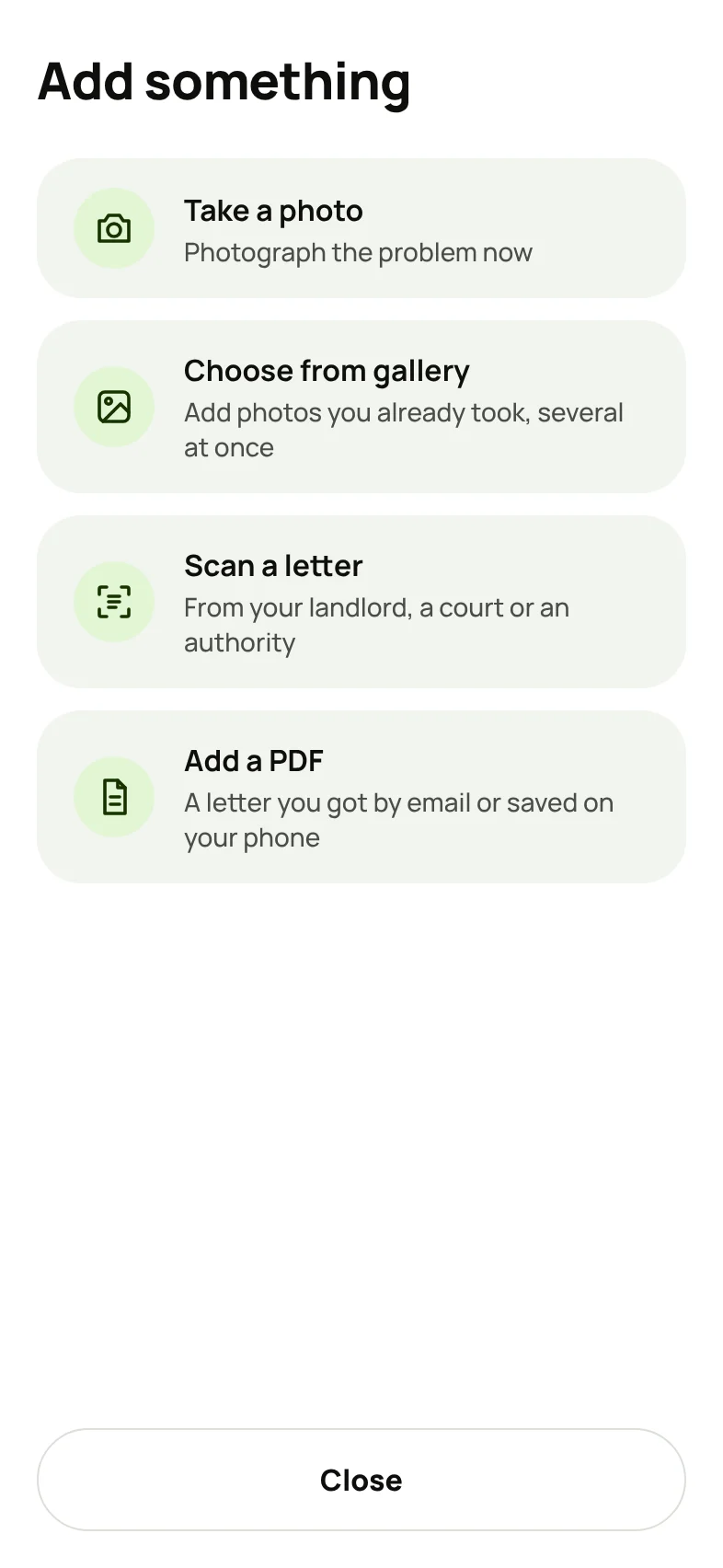
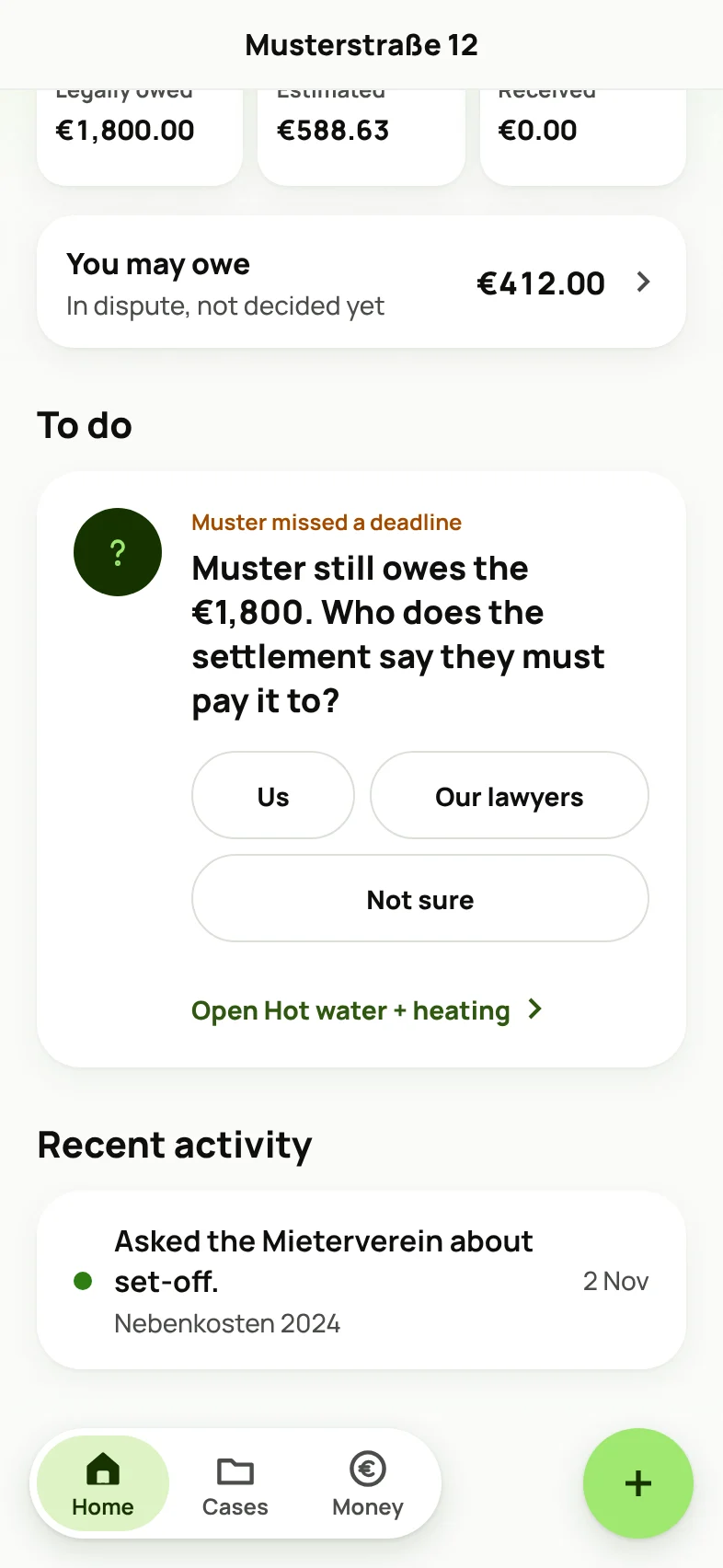
The card is lime when it’s the renter’s move, grey with a countdown while the landlord has time, and orange when the landlord missed it. Its words come from one tested function, so a case can never sit with nothing to do.
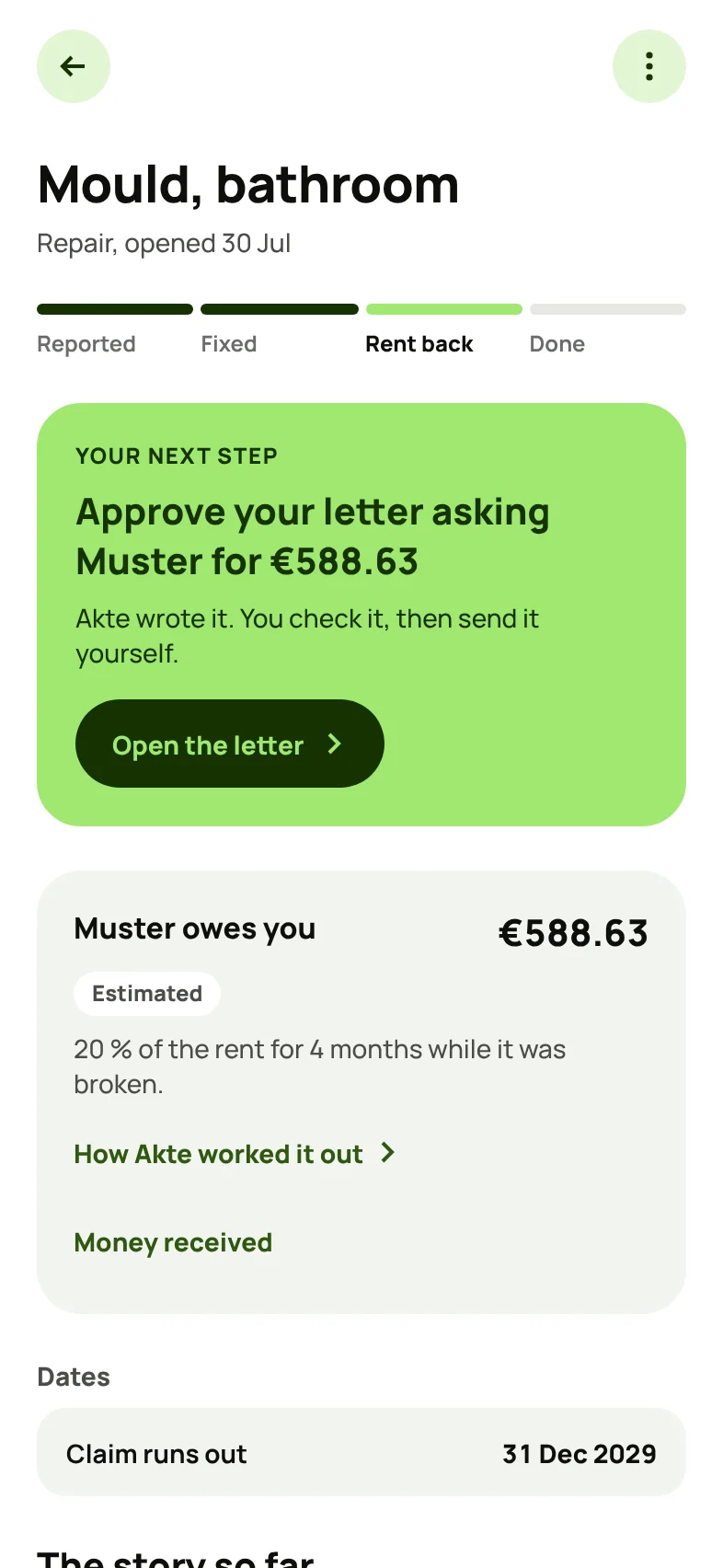
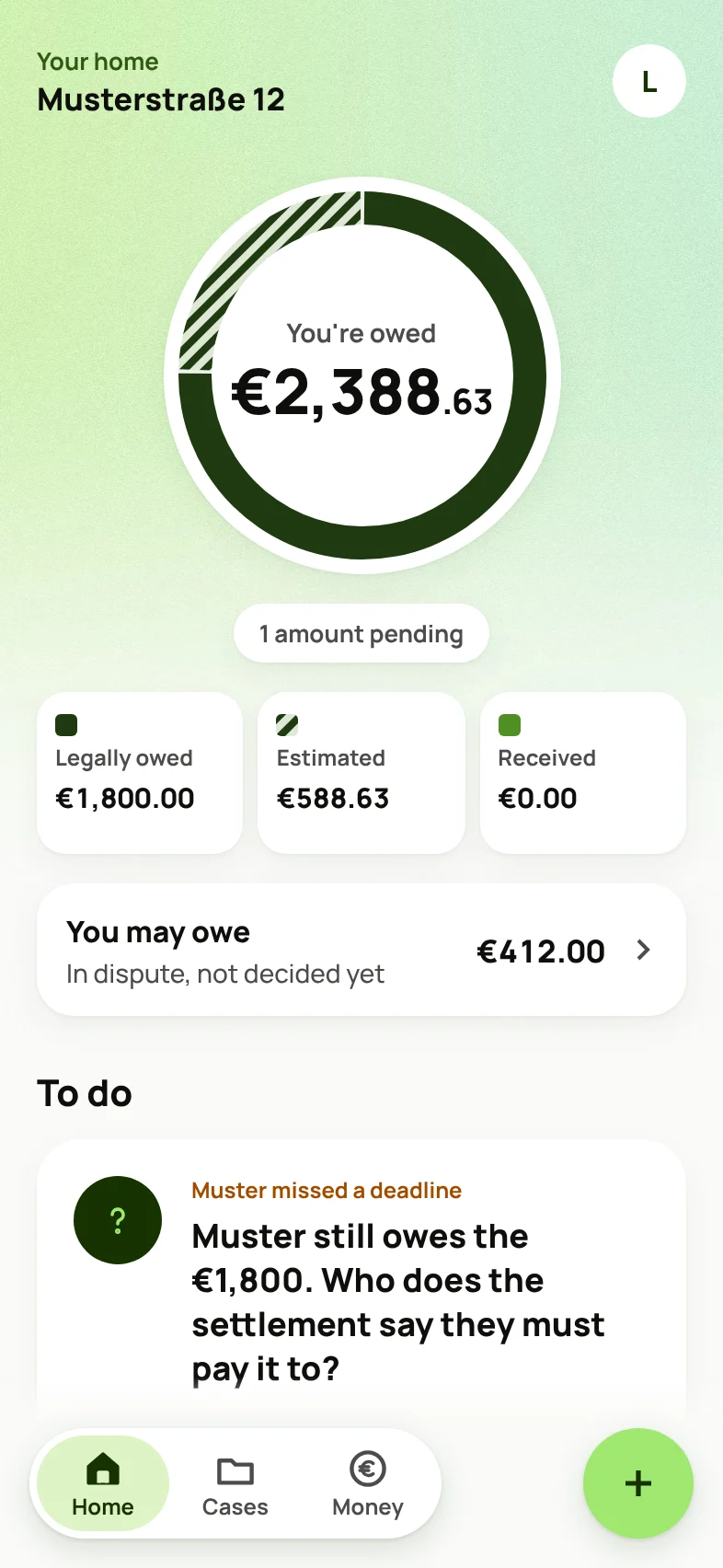
Money owed is never one netted number
- Rejected
One total, with debts in both directions netted- Chose
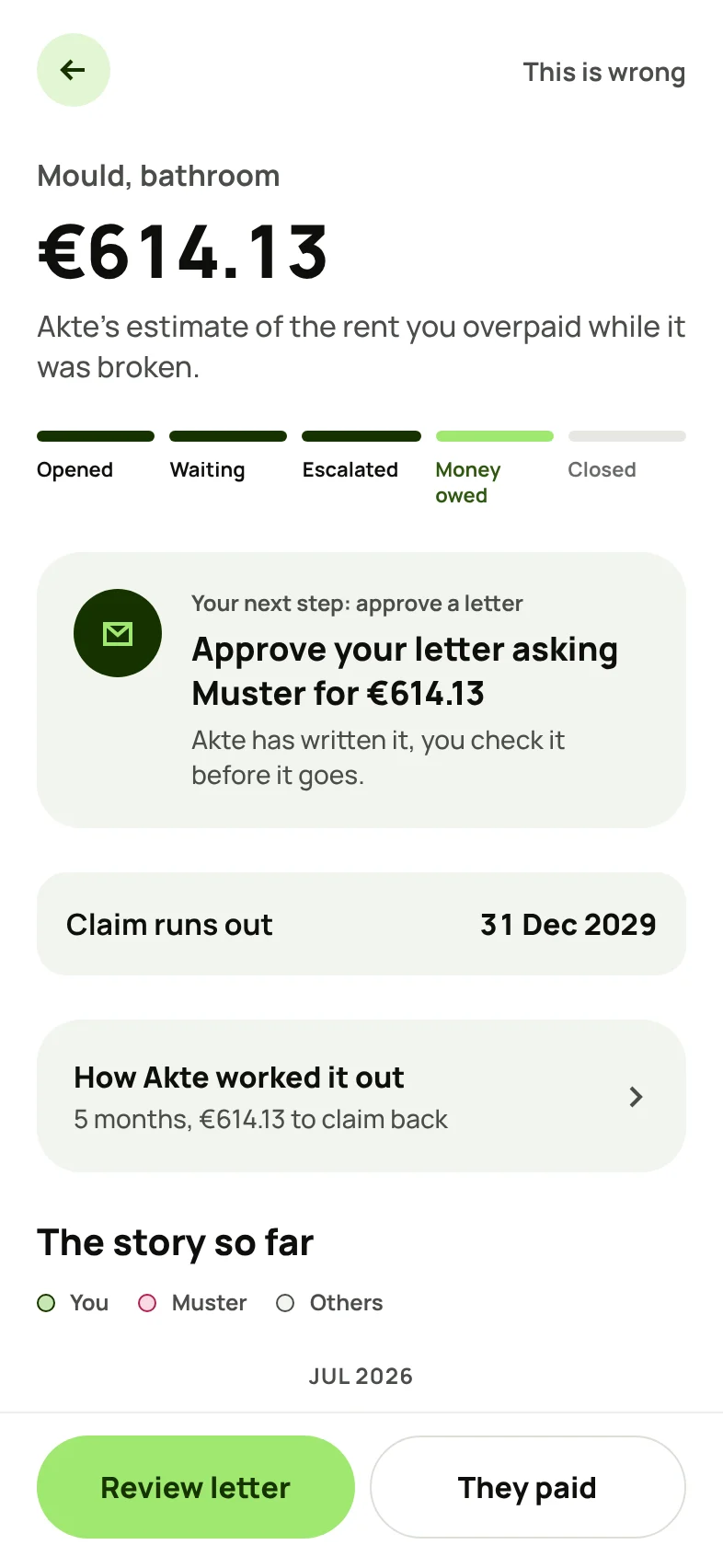
- Three statuses, shown apart: legally owed, estimated, received
Only legally owed money can be set off against rent, so an estimate has to look different from a debt. One function works out every money state and the screens only draw it, so Home and Money can never show different numbers.
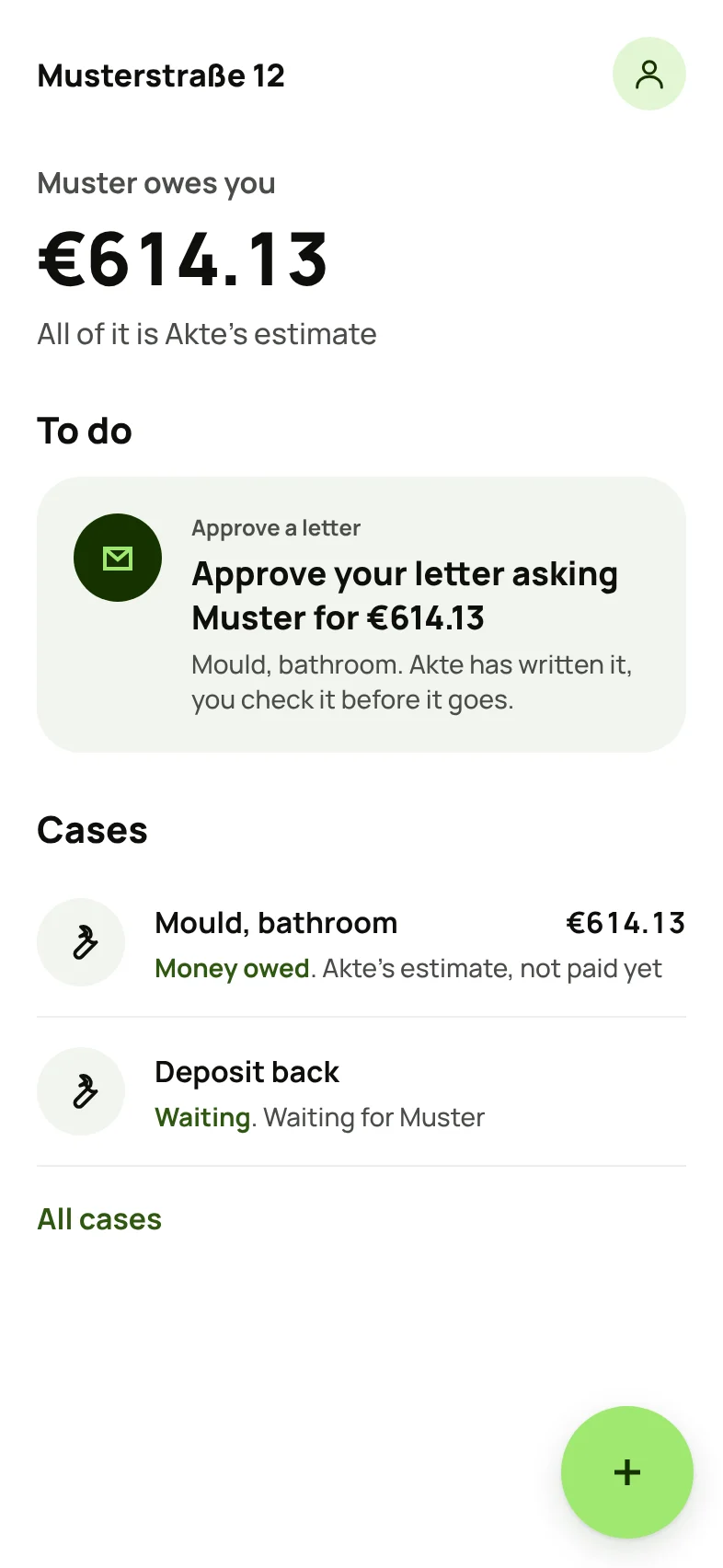
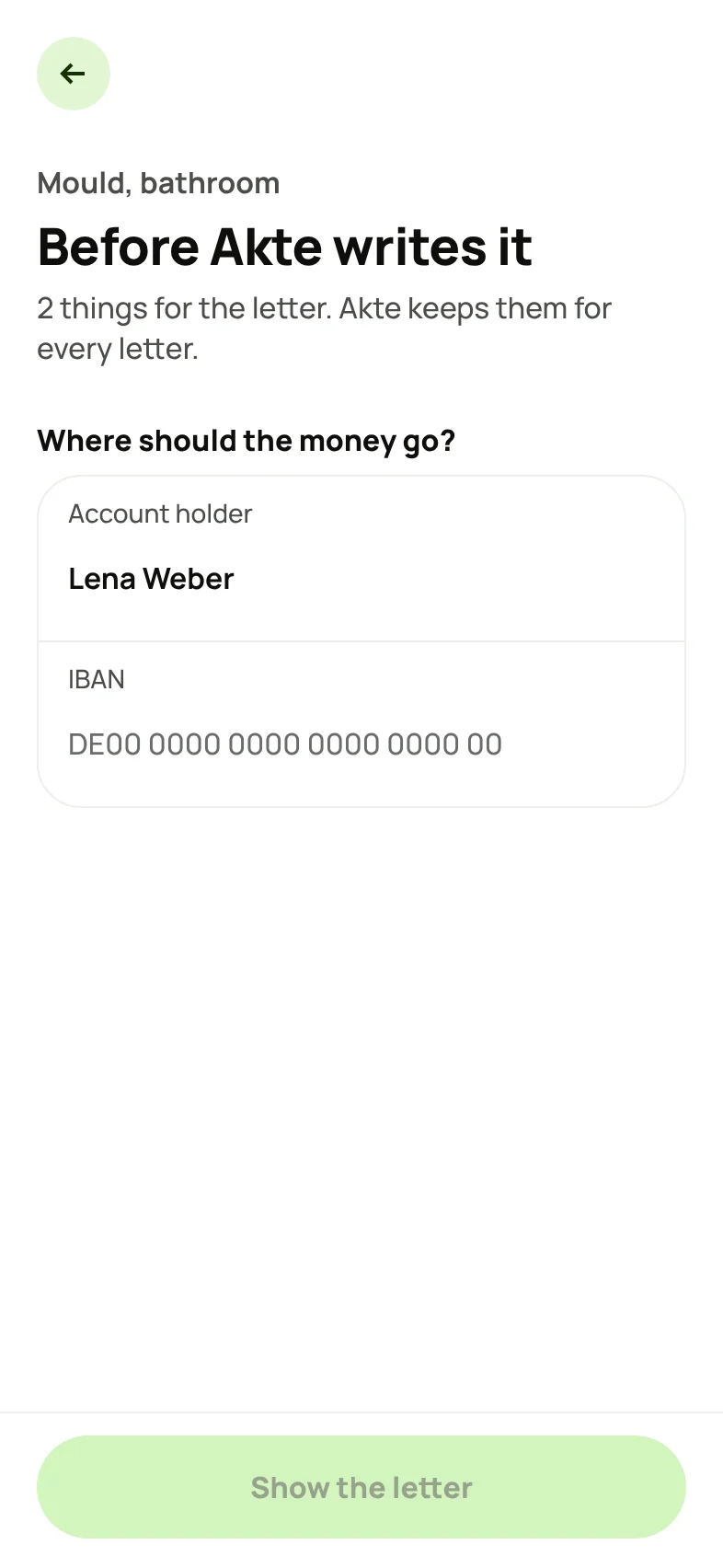
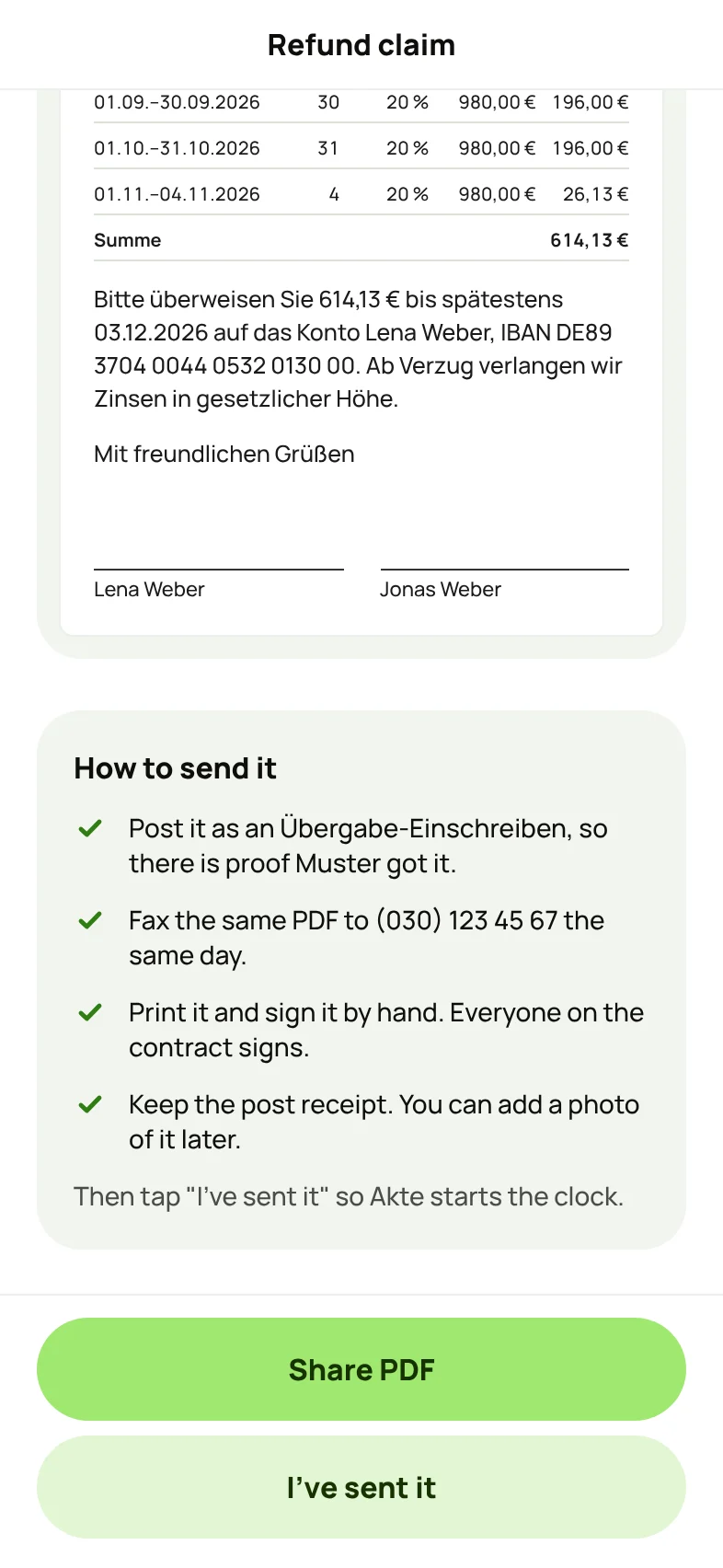
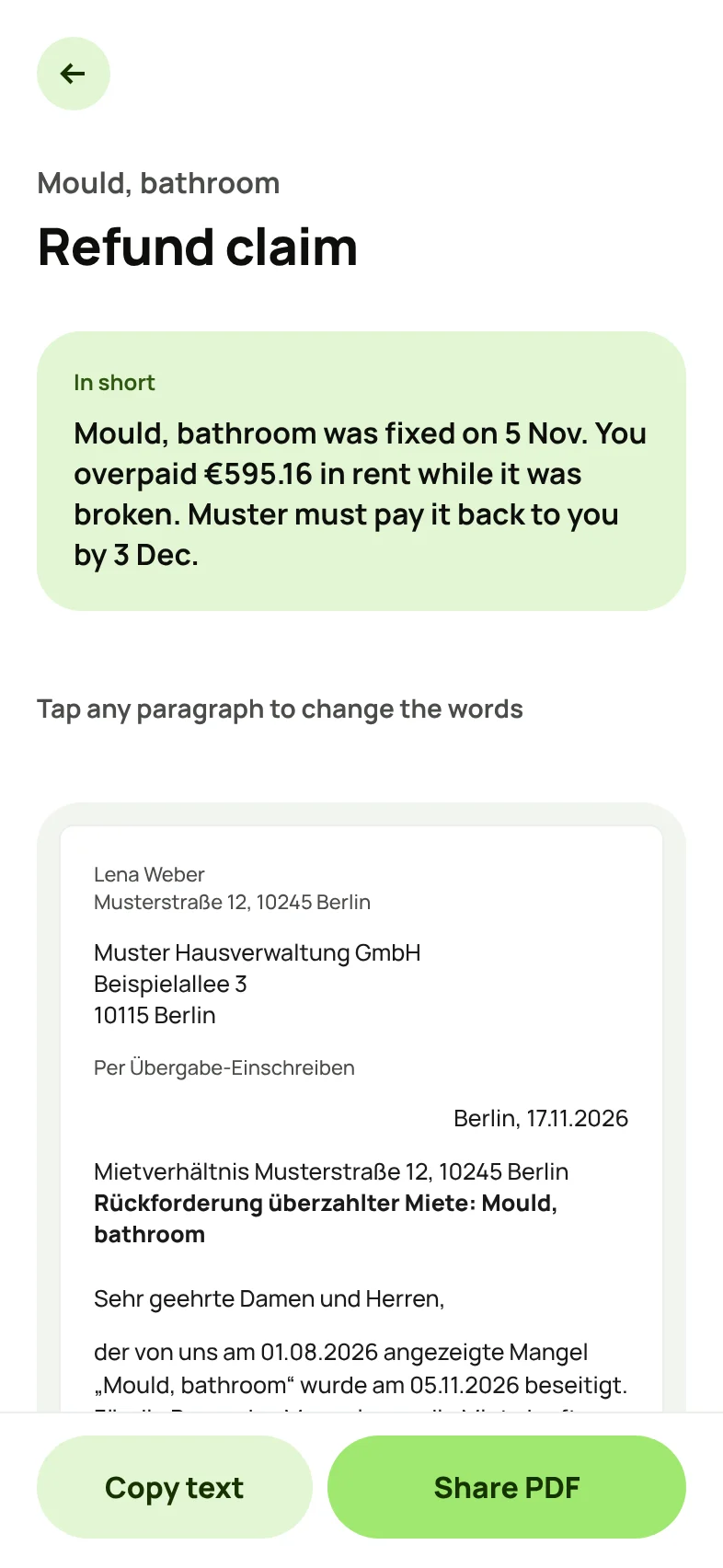
Akte writes the letter. The renter sends it.
- Rejected
Post and fax from the app, with an on-screen signature- Chose
- Copy text or share a PDF. Print, sign and post it yourself
One rule decided this and every cut after it: build nothing the phone already does. The renter can rewrite any paragraph in German, and Akte checks its deadlines, dates and amounts are still there.
Five neighbours tested it. Flat problems worked, building problems didn’t.
The bet: if every problem shows one next step with its deadline, no case stalls. The target was a next step in under 2 minutes, unaided.
- Who5 neighbours in one Berlin building. 4 nationalities, aged 28 to 61, all living with the same shared problems.
- The taskEach installed the beta on their own phone and logged one building problem and one problem in their own flat. I timed them and didn’t help.
- What workedProblems in their own flat. 5 of 5 reached a next step unaided, in a median of 1 min 20 s.
- What didn’tBuilding problems. 4 of 5 got stuck at “Where”, because it only offered rooms. The median was 3 min 40 s.
The shared problems were rubbish piling up in the courtyard, graffiti and loose tiles in the hallway, and a broken front door lock. Akte had been designed around the flat, not the building. The front door lock also got no emergency question.
- What the test showed
- “Where” only offered rooms, and a broken lock was not treated as urgent
- What I changed
- Building places in “Where” (Courtyard, Stairwell), a “Door or lock” answer, and the emergency question for the lock
Cases that several neighbours share went into the backlog.